Colerain OH Neighborhoods Guide to Finding Your Ideal Fit
April 23, 2026
April 23, 2026
Choosing a neighborhood in Colerain is not just about finding a house you like. It is about finding the right fit for your daily routine, your space needs, and the way you want to live. If you are comparing Cobblechase to other parts of Colerain Township, this guide will help you sort through the differences with more confidence. Let’s dive in.
Colerain Township is a large northwest Hamilton County community covering 42.7 square miles, with 59,077 residents and a median age of 39.3, according to Census Reporter. The median owner-occupied home value is $190,900, which is below Hamilton County’s $241,900.
What matters most for buyers is that Colerain is already largely suburban in character. Nearly 75% of housing is owner-occupied, and 82% is single-unit housing, so most neighborhood decisions come down to lot size, street pattern, density, and commute style rather than choosing between completely different housing types.
Colerain’s planning documents divide the township into seven broad character areas: Bevis/Pleasant Run, Colerain Corridor, Harrison, Greater Northbrook, Peachgrove/Daleview, Western Colerain, and Whiteoak/Greater Groesbeck. According to the township’s current comprehensive plan, the core areas tend to be more urban, with smaller lots and greater density, while Western Colerain and Harrison are more rural and often include multi-acre lots.
These are best used as comparison tools, not hard boundaries. If you are trying to choose the right neighborhood, they give you a helpful way to narrow your search based on lifestyle.
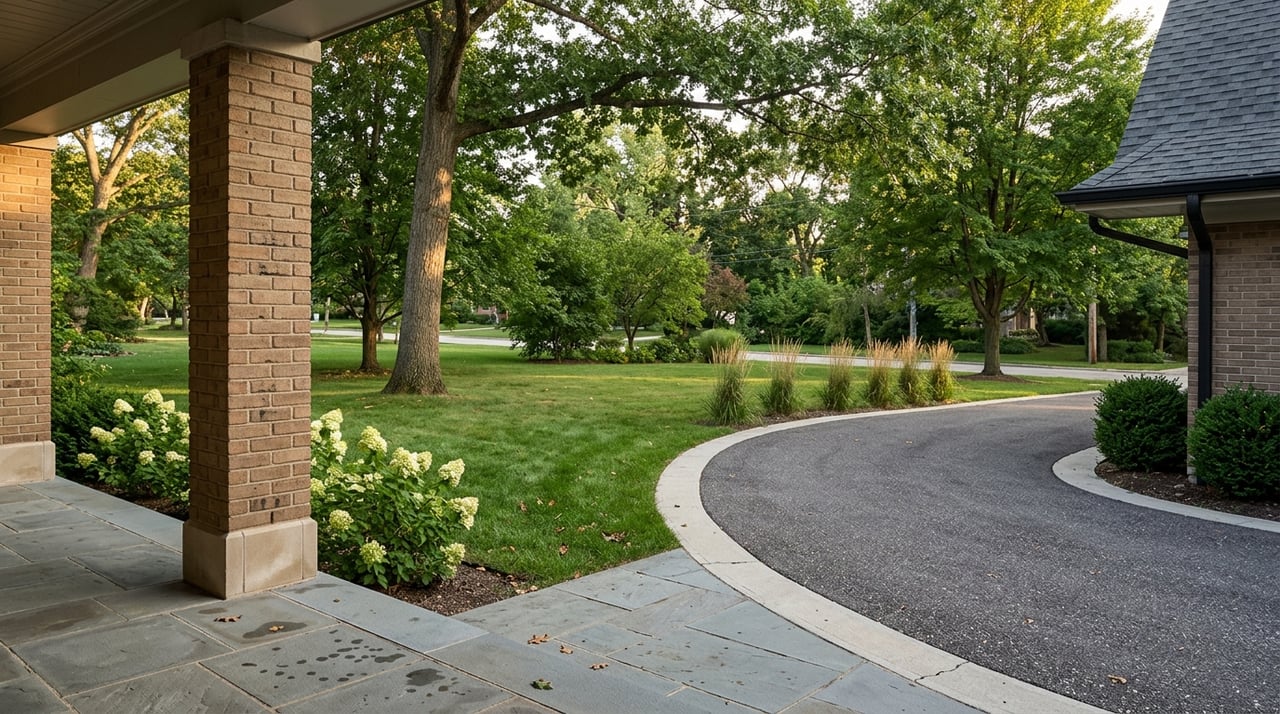
If you are focused on Cobblechase, the biggest takeaway is that it fits the profile of an established suburban pocket. Township zoning records place Cobblechase Court in an R-5 zoning district, which the township describes as Suburban High Residential.
That matters because R-5 helps explain what many buyers notice right away: homes in this type of area often have a more traditional subdivision layout, with larger lots than the denser township core, but not the acreage you find farther west. Township zoning materials also note standards such as a 70-foot minimum lot width and side-yard setback requirements, which supports the idea that Cobblechase tends to offer breathing room without feeling rural.
For many buyers, that makes Cobblechase a strong middle-ground option. You get a neighborhood that feels established and suburban, with more yard space than compact core areas, while still staying connected to the rest of Colerain.
If convenience is your top priority, you may also want to compare Cobblechase with Greater Groesbeck/White Oak or Greater Northbrook. These pockets are part of Colerain’s more urban and higher-density core, according to the township’s planning documents.
The comprehensive plan describes Greater Groesbeck/White Oak as a more compact part of the township with smaller lots and a denser layout. This area is often a fit for buyers who want easier access to neighborhood services and a more connected street pattern.
This pocket also includes civic and public-use anchors. The area around Groesbeck Park and the Groesbeck Branch library is part of that more convenience-driven comparison, and township materials note civic-space improvements tied to the Greater Groesbeck Plan.
Greater Northbrook offers another closer-in option, but with its own character. Much of Northbrook is zoned R-6 Urban Residential, which township planning materials describe as moderate-density housing that can include two-family and some multi-family homes.
Township case examples show that lot sizes in Northbrook can be more compact, including parcels under 8,000 square feet with widths around 50 to 67 feet. The township has also invested in sidewalk work, drainage attention, vacant lot planning, and greenspace improvements in the area, which shows active neighborhood-level planning.
For you as a buyer, Northbrook may feel convenient and established, but not uniformly walkable. The township notes that its commercial edge lacks strong connections for people without a car, so it is best to think of Northbrook as practical and connected rather than fully pedestrian-oriented.
If your priority is privacy, open space, or a quieter edge-of-town setting, Western Colerain and Harrison deserve a close look. The township’s comprehensive plan identifies these areas as the rural end of the market, and they often feature multi-acre lots.
The township’s zoning framework helps explain why. Rural-Estate Residential standards use a 1-acre minimum lot area and a 130-foot minimum width as a benchmark, which is a very different feel from denser core neighborhoods or suburban pockets like Cobblechase.
That usually means a trade-off. You may gain more land and separation between homes, but you will likely rely more on your car and spend more time getting to errands or major corridors.
One of the easiest ways to choose the right Colerain neighborhood is to picture an average Tuesday. Your best fit often becomes clearer when you think beyond the house itself.
Colerain Township’s average commute time is 23.7 minutes, according to Census Reporter. Township road records highlight major routes such as I-275, I-74, Colerain Avenue, Hamilton Avenue, Springdale Road, Banning Road, Galbraith Road, and Pippin Road, which shape how different pockets connect to work, shopping, and everyday stops.
If you want faster access to errands and major roads, corridor-adjacent or closer-in neighborhoods may make more sense. If you care more about space and less traffic around you, western-edge areas may be a better match.
Amenities in Colerain are clustered rather than evenly spread, so it helps to know what you want nearby. The township’s Community Connector page highlights the Main Street Trail, which links Clippard Park, Colerain High School, Stone Creek Towne Center, Colerain Park, and the township administrative complex.
Heritage Park is another major local amenity, with baseball fields, disc golf, canoe access, a dog park, walking trails, and a playground. The township’s Helpful Links page also points residents to Northgate Mall, the Groesbeck Branch library, Clippard YMCA, Farbach-Werner Nature Preserve, and Northwest Local Schools.
Instead of asking which neighborhood is “best,” ask which one places you closer to the places you will actually use. That question usually leads to a better decision.
If school assignment is part of your home search, verify it at the parcel level. The township’s Helpful Links page identifies Northwest Local Schools as the key public district reference for most township buyers, and it also notes that a new Colerain Elementary broke ground in October 2025 at the former Houston site.
The most important thing is not to assume that a mailing address tells the full story. School boundaries, construction timelines, zoning, and lot details should all be confirmed before you write off or commit to a neighborhood.
If you are feeling stuck, start with this simple framework:
Then verify the details that can change your decision:
The township’s Zoning Commission resources are a smart place to start when you want to confirm parcel-level facts.
The best neighborhood in Colerain is not the same for every buyer. Cobblechase may be the right match if you want an established suburban setting with more yard space than the denser township core. But if your top priority is quick errands, compact streets, or more land, another pocket may suit you better.
That is where local guidance makes a real difference. When you compare neighborhoods through the lens of commute, lot size, convenience, and long-term fit, you can make a decision that feels right not just on day one, but years from now.
If you want help comparing Cobblechase with other Colerain-area neighborhoods, Michele Donovan can help you narrow the options and find the right match for your goals.
Whether you’re buying your first home, upgrading to fit a growing family, or downsizing for a new chapter, we’re here to guide you with the care and expertise you deserve.
MICHELE DONOVAN GROUP
6730 Ruwes Oak Dr Cincinnati, OH 45248