Monfort Heights Home Styles: How To Choose The Best Fit
June 4, 2026
June 4, 2026
Wondering which home style makes the most sense in Monfort Heights? That is a smart question, because in this part of Hamilton County, your decision often comes down to how you want to live day to day, not just what looks best from the street. If you are weighing a ranch, split-level, two-story, or a newer build, this guide will help you compare stairs, layout, lot use, and long-term fit so you can make a more confident move. Let’s dive in.
Monfort Heights has a strong owner-occupied housing base, with 79.3% of housing units owner-occupied in the 2020 to 2024 American Community Survey. The median value of owner-occupied homes was $233,500, which points to a market where many owners stay put and buy with long-term use in mind.
That long-term feel also fits the area’s housing history. Northwest Local School District notes that Monfort Heights expanded rapidly in the late 1950s as more people moved into northwest Hamilton County. That helps explain why mid-century suburban home styles still shape much of the local housing mix today.
In other words, when you shop in Monfort Heights, you are often choosing among practical, established home types rather than chasing one trendy format. Your best match usually depends on three things: stairs, lot use, and how much updating you want to take on.
Ranch homes are one-story houses with low-pitched roofs and a wide, horizontal shape. Ohio History describes them as a major postwar housing style, and in the Monfort Heights area, many examples date to the 1950s. Attached garages are common, and local examples often sit on lots around 7,400 to 7,800 square feet, with some quarter-acre or larger parcels.
For many buyers, the biggest appeal is simple daily living. With everything on one level, you may find it easier to move between bedrooms, living spaces, laundry areas, and outdoor access. If you are thinking long term, fewer stairs can be a major plus.
The tradeoff is layout separation. Because everything sits on one floor, ranch homes often have less privacy between living and sleeping areas than a multilevel home. If you want clearly separated zones for work, hobbies, guests, or recreation, a ranch may feel more compact in how it lives.
Buyers often like ranch homes for these reasons:
Countywide housing data also supports the idea that one-story homes have a broad buyer audience. In Hamilton County’s October 2024 snapshot, 48% of active single-family listings were one-story, making them the largest share of available listings.
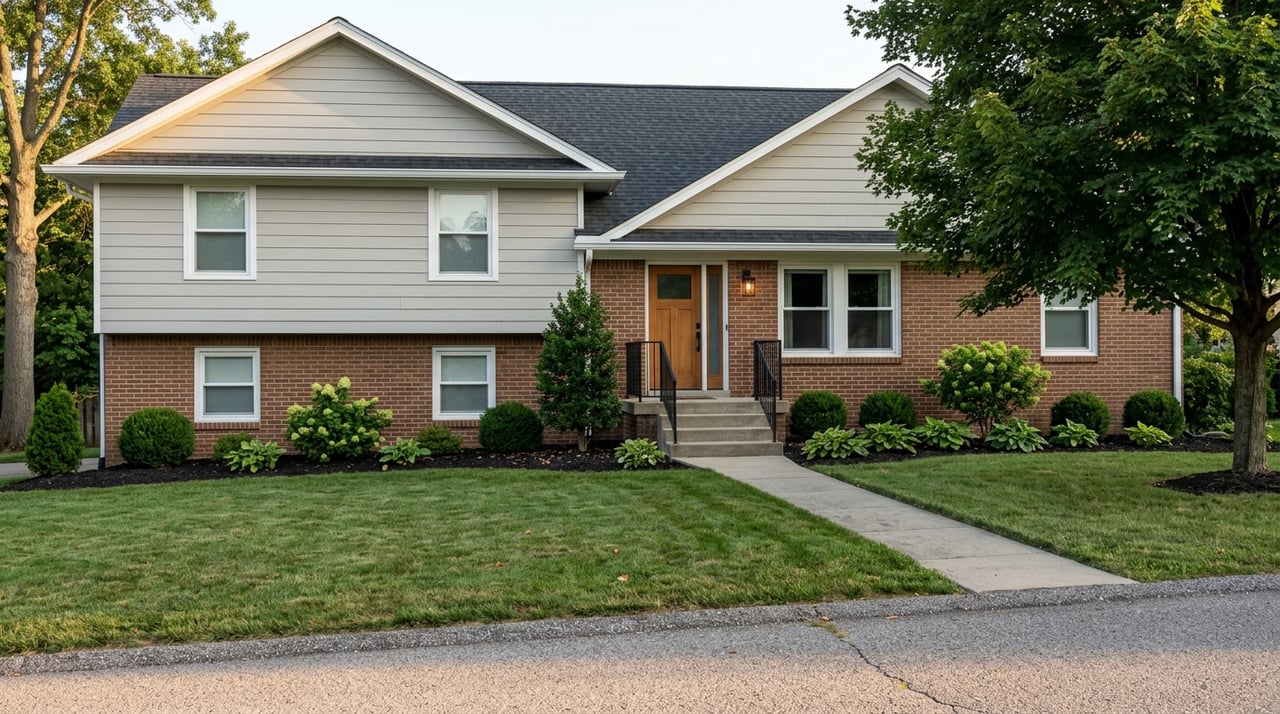
Split-level homes first appeared in the 1950s and became more popular in the 1960s. They are built around short runs of stairs that separate different parts of the home, often dividing garage, living, bedroom, and lower-level recreation spaces.
If you want more separation than a ranch offers, a split-level can be a good middle ground. You may get defined zones for entertaining, sleeping, and casual lower-level use without needing the full footprint of a large two-story home. Ohio History also notes that this style worked well on sloped or otherwise challenging lots, which helps explain why it became a practical suburban option.
The main downside is also the main feature: stairs. Even though the stair runs are shorter than in a traditional two-story, you still move up and down throughout the home. That can make split-level homes more preference-driven, both when you buy and later when you sell.
A split-level may fit you well if you want:
For resale, presentation matters. Hamilton County’s 2024 housing study shows that split entry and bi-level homes made up a smaller share of active listings than one-story or two-story homes, which suggests you may need a more targeted approach when it is time to market one.
Two-story homes are part of the local housing mix, though they appear less common than ranches in current Monfort Heights-area listings. Ohio residential history sources note that suburban builder homes in the 1950s commonly included two-story Colonial forms alongside ranches, Cape Cods, and split-levels.
The biggest advantage of a two-story home is separation. Bedrooms are usually upstairs, which can create a clearer divide between private rooms and the main living level. If you like that structure, or if you want the home to feel more organized by use, a two-story can be very appealing.
Two-story homes also use lot space efficiently. Because they build up instead of spreading out, they can leave more outdoor area available on the same parcel. That can be helpful if yard use matters to you but you also want more interior square footage.
A two-story may be the right fit if you want:
The tradeoff is simple: stairs are part of everyday life. That is not automatically a negative, but it should be part of your decision if you are thinking about long-term comfort or future resale flexibility.
If you are drawn to newer construction, the appeal is easy to understand. Newer homes often offer open-concept layouts, more contemporary finishes, and less immediate maintenance than an older resale home.
But in this market, newer builds usually come with a budget jump. Hamilton County’s official housing study says new construction is difficult to deliver under $300,000 and generally targets move-up buyers. That means a newer home may offer turnkey condition, but it often asks you to stretch more on price than an older Monfort Heights resale.
Lot size can also shift with newer construction. The same county study notes that newer single-family subdivisions across the Midwest now tend to use narrower lots than older developments built before the Great Recession. So while a newer build may give you the floor plan and finishes you want, it may not offer the same yard feel or older-home character found in established Monfort Heights housing.
A newer build may be worth the higher budget if you prioritize:
If character, larger established lots, or mid-century layout options matter more, an older resale may be the stronger match.
In Monfort Heights, lot size is part of the story, but it should never be assumed from an online map alone. Recent local examples show many lots around 7,400 to 10,400 square feet, with some quarter-acre parcels and some near half an acre. Hamilton County Auditor information makes clear that aerial imagery shows only approximate property lines, while exact dimensions come from the deed.
That matters when you compare home styles. A ranch may spread across more of the lot, leaving less side yard or backyard than you expect from the raw lot number alone. A two-story may preserve more outdoor area because the footprint is smaller, while a split-level often lands somewhere in between depending on the site and garage placement.
Before you fall in love with a backyard setup, make sure you verify the actual parcel dimensions and how the home sits on the lot. The usable yard is often more important than the lot size listed on paper.
There is no one right answer for every buyer in Monfort Heights. The better question is which style fits how you want to live now and what you want your next five to ten years to look like.
If long-term ease is your top priority, a ranch may be the simplest choice because of its one-level layout. If you want more separation and do not mind short stair runs, a split-level can offer a practical middle ground. If you want the most organized division between public and private spaces, a two-story may feel best.
Newer builds can be attractive if you want a turnkey home and are comfortable with the higher budget that often comes with new construction in Hamilton County. Older homes can offer established settings, familiar mid-century forms, and sometimes more lot variety, but they may also come with more updates over time.
When buyers feel stuck between styles, we usually come back to a short checklist:
In Monfort Heights, style labels matter less than fit. This is a market shaped by mid-century suburban housing, stable ownership, and practical resale choices. The best home for you is the one that matches your routine, your priorities, and your comfort with maintenance, layout, and budget.
If you want help sorting through Monfort Heights home styles, comparing resale options, or deciding which layout truly fits your life, Michele Donovan can help you find the right match with calm, local guidance.
Whether you’re buying your first home, upgrading to fit a growing family, or downsizing for a new chapter, we’re here to guide you with the care and expertise you deserve.
MICHELE DONOVAN GROUP
6730 Ruwes Oak Dr Cincinnati, OH 45248